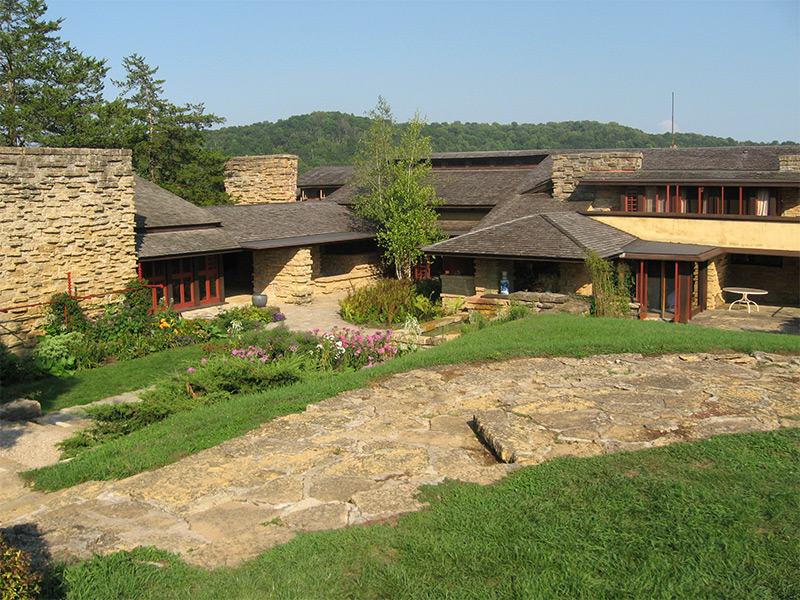
Taliesin
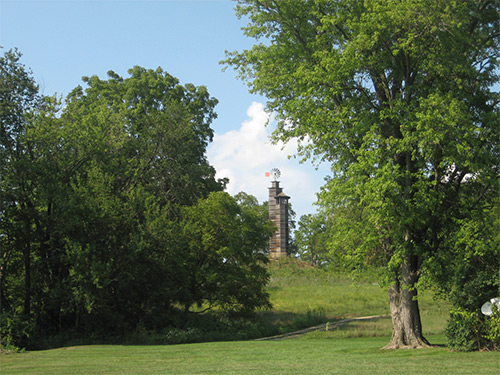
Ah, where to start? As a long-time appreciator of FLLW's architecture, I've always looked forward to visiting Taliesin (between Arena and Spring Green, Wisconsin, about 30 miles west of Madison). On this trip, we reserved two tickets for the 2-hour "Highlights Tour," which focused on the Frank Lloyd Wright School of Architecture building and his home and studio, with short trips to view the Romeo and Juliet windmill and the Midway barns.
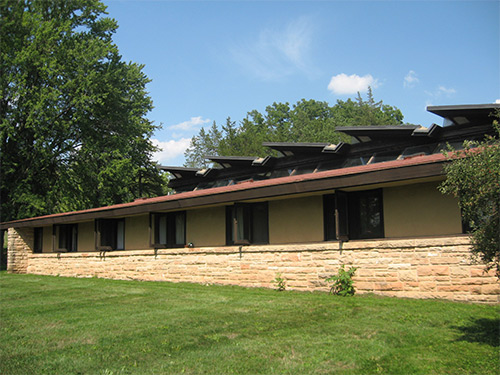
We met at the Visitor Center (right and below left), which has a bookstore and cafe. On the tour, we learned this 1950s building was originally intended as a high-end restaurant, bar, and dance venue. It has been well-adjusted to the Visitor Center role.
There, we boarded a bus and traveled across the 600-acre estate to the school house, originally built for Wright's aunts. It now houses the School of Architecture, with drafting rooms, class rooms, and a theater (with an amazing screen curtain designed by Wright).
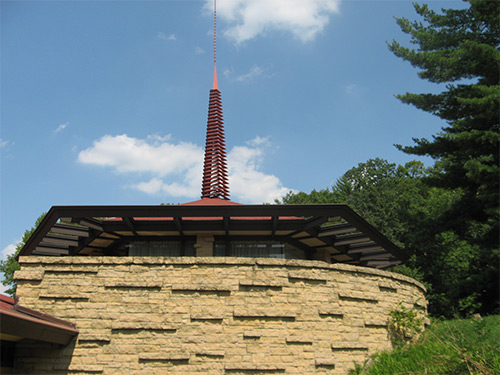
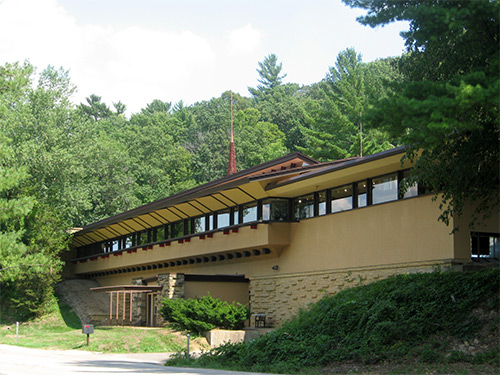
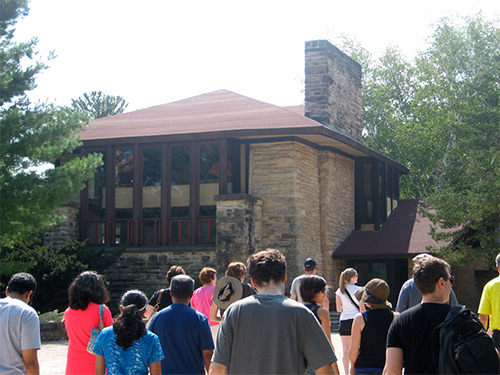
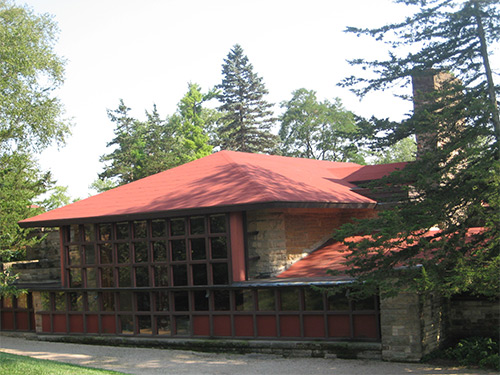
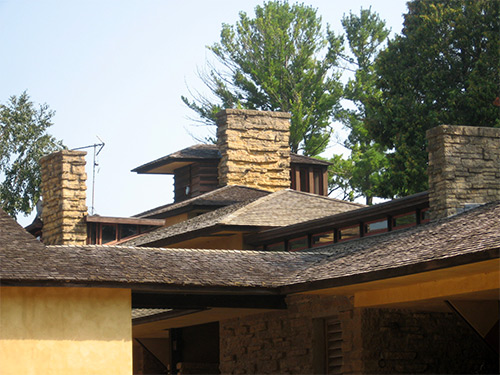
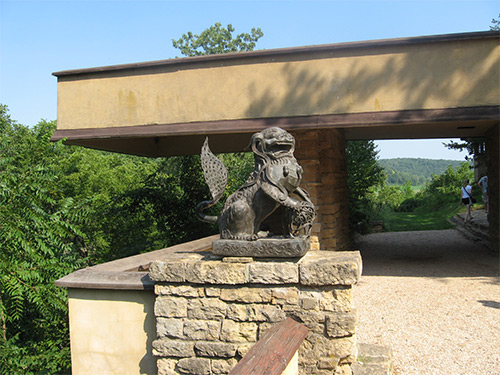
Upon arrival at the home itself, I was amazed to see the cars. But Wright had re-designed the approach to the house in the 1930s, replacing a horse-and-buggy bridge with a curving driveway past a waterfall. The foo dog is sitting in front of a long birdwalk, outside the bedroom of Wright's third wife.
I was more than a bit depressed to see the "state" of much of this estate. Obviously, there is a shortage of funding for preservation and improvement. Only Wright's studio was air conditioned and no where had heat; floors had deteriorated in the house, walls and ceilings showed cracks, eaves were sagging and not intact. The school's roof was tarpaper, not the original tiles or cedar shakes. There was very little information about original landscaping, furniture, or lighting. In the school's main room (2 stories high), the balcony had an inset into one corner, and no one knew why (it wasn't there in period photographs). Wright-designed seats were worn and had lost their color, beams were cracking, brass art was wearing. If you like Wright, you had better hope the Wright Foundation finds a way to raise the necessary funds to restore this rambling, personable estate to its original luster.
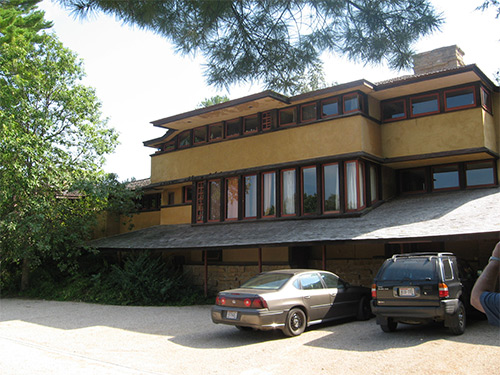
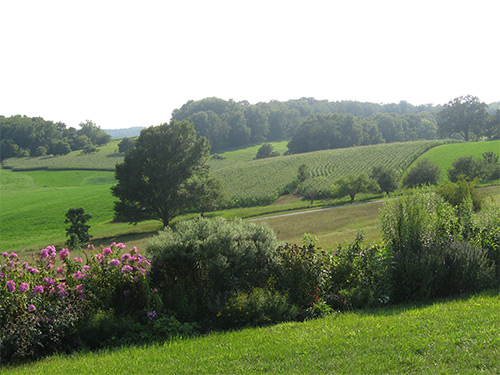
The view of Wright's Taliesin house and studio, from the "crown of the hill" (the house is built on the "brow").